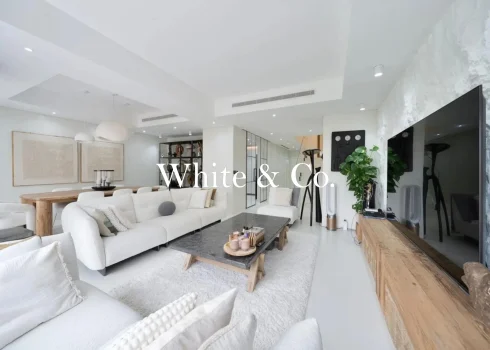
Al Furjan Dubai, which translates from Arabic as “small villages,” is a Nakheel-developed residential community in New Dubai, positioned between Sheikh Zayed Road and Mohammed Bin Zayed Road. The name is deliberate: the community was conceived around close-knit, village-scale living, and the reality largely delivers on that intention. Spanning over 5.6 million square metres, Al Furjan is built in residential clusters with a mixture of contemporary and traditionally-styled villas, townhouses and low to mid-rise apartment buildings, with parks, pavilions and walking corridors woven between them.
The community sits at a genuinely strategic point on Dubai’s map. Jebel Ali, Dubai Marina and Jumeirah Golf Estates are nearby. Ibn Battuta Mall is minutes away. Al Maktoum International Airport sits approximately 20 minutes by car, a fact that gives Al Furjan unusual significance as the new airport’s development continues and the south-western corridor grows in both population and commercial weight. Al Furjan Dubai Metro Station on Route 2020 places the community on the city’s rail network, a feature that distinguishes it from many similarly priced communities that rely entirely on private transport.
Al Furjan Dubai is a community that has arrived. The schools are open, the pavilions are trading, the parks are populated and a genuine residential community has formed around all of it. Buyers who visit expecting a half-built suburb consistently find something more settled and more characterful than they anticipated.
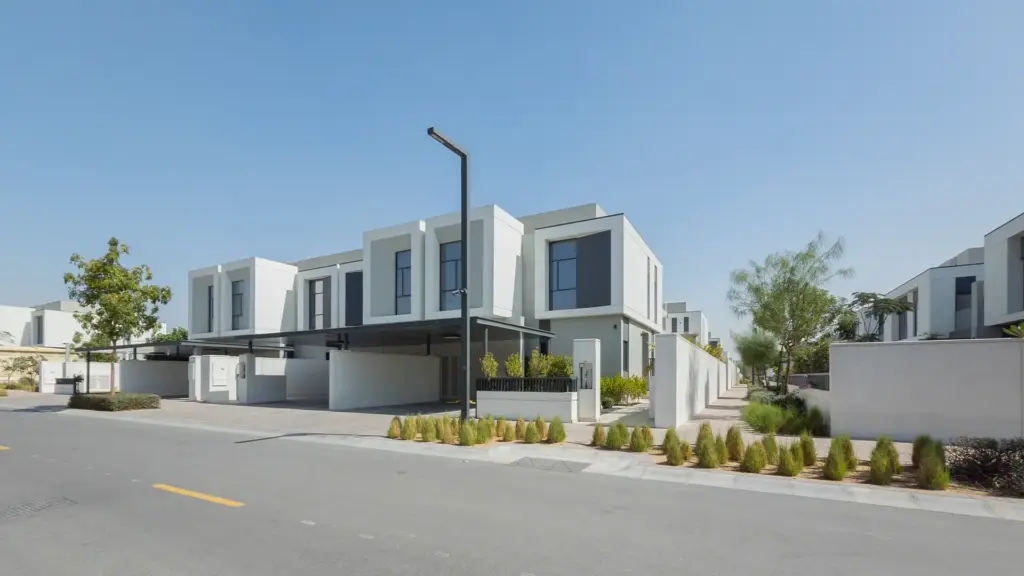
Value is the word that comes up first and it is not an abstraction. The size of home available at a given price point in Al Furjan Dubai is one of the strongest in Dubai. A family stretching into a three-bedroom apartment in Emirates Living can comfortably reach a four-bedroom villa here. That differential in square footage, outdoor space and the daily experience of being at home is the thing that most consistently converts browsers into buyers.
Location is the second consistent factor, and one that buyers from outside Dubai sometimes underestimate. Al Furjan Dubai sits closer to Abu Dhabi than almost any other established Dubai residential community. For the significant number of residents who commute between the two cities, a pattern far more common than Dubai-centric area guides typically acknowledge, Al Furjan removes 15 to 20 minutes from each direction of that journey. Over a working week that is a meaningful quality-of-life difference rather than a marginal one.
The metro is a third consistent draw. Al Furjan Metro Station on Route 2020 gives residents access to Expo City and the broader network, a connectivity advantage that comparable communities at similar price points including nearby Jumeirah Park and Emirates Hills do not have. For dual-income households where one partner commutes by rail, this makes Al Furjan straightforwardly practical in a way that requires no rationalisation.
Nakheel’s ongoing investment in the community is something buyers cite directly. New pools, expanded park provision, padel courts and continued infrastructure upgrades signal developer commitment rather than completion and withdrawal. Service charges are also meaningfully lower than in comparable Nakheel communities and in Emirates Living more broadly, a recurring operational saving that accumulates over years of ownership.
For buyers willing to look further, Al Furjan is one of the few established communities in Dubai where land plots are available for residential development: an unusual opportunity to build a bespoke home within a functioning, amenitised neighbourhood rather than in a greenfield development without community infrastructure.
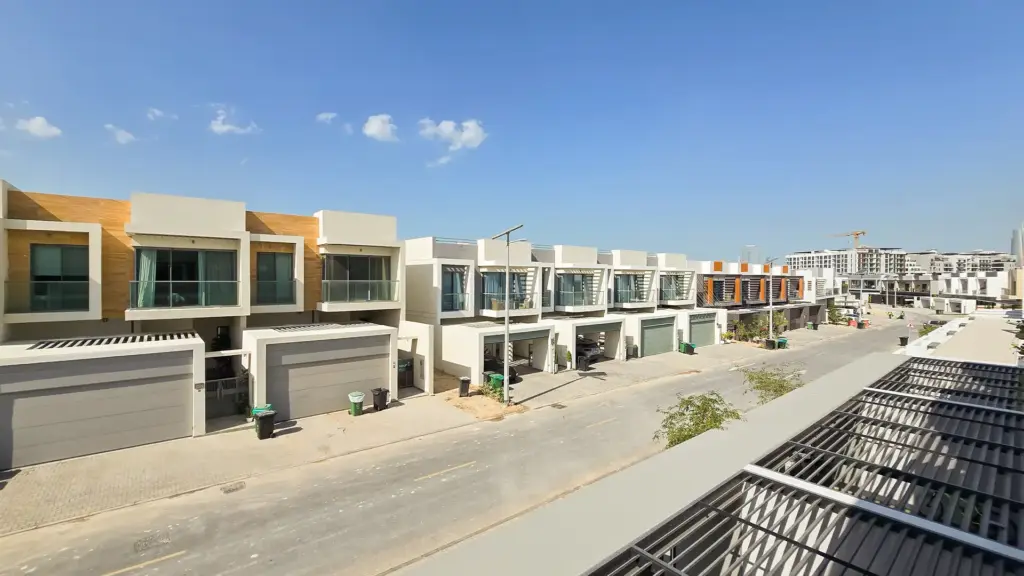
Al Furjan is quiet. For the families who live here, that is not a compromise or a consolation: it is the central point. Wide streets, substantial gardens, parks that are used without being crowded and a pace of life that rewards those who came to Dubai to build a life rather than to be perpetually stimulated by it.
The community is genuinely family-orientated in the operational sense. Two British-curriculum schools sit within the community, nurseries are present, parks are accessible from most residential clusters and the pavilions provide day-to-day convenience without requiring a car journey. McCafferty’s Irish pub within the pavilion has become something of a social institution, functioning as the kind of neighbourhood local that most Dubai communities lack entirely. It is the place where residents from different clusters and different nationalities end up sharing a table, and that happens because Al Furjan has the critical mass of long-term residents to sustain it.
The misconception that Al Furjan lacks community feel is one that brokers working the area hear consistently from clients who have only read about it. The reality on the ground is a neighbourhood where owners and long-term tenants have formed genuine social connections at the schools, the parks, the pavilion and the padel courts. The mix of nationalities and household types, and the relative stability of the resident population, produces a community texture that many newer, higher-profile Dubai addresses actively aspire to but have not yet developed.
Families find the school logistics straightforwardly manageable in a way that matters when it has to happen five days a week. The Arbor School and Arcadia Global School, both British curriculum, are within the community, turning the school run from a commute into a walk or a two-minute drive. The pavilions cover practical household needs: Spinneys, Géant, pharmacies and a selection of cafés. Afternoons in cooler months are spent at the parks or community pools, and Jebel Ali Recreation Club serves as a leisure extension for those who want a gym, pool and tennis courts in a proper club environment. Ibn Battuta Mall handles larger shopping trips and weekend cinema visits without requiring a significant drive.
Couples tend to appreciate the scale of what they can afford here: a villa or large townhouse with outdoor space at a price that does not require choosing between a mortgage and a life. The pavilions, McCafferty’s and the growing restaurant offering provide social infrastructure on the doorstep. JBR Beach and the Marina corridor are 20 to 25 minutes away, close enough for weekend beach days without the community itself carrying the density and traffic that come with a beachfront address.
Professionals whose working lives are not centred on Downtown or DIFC find Al Furjan’s location is not a compromise but the most sensible address available at its price point. Those working in Jebel Ali Free Zone, Dubai South, the logistics and industrial corridor or in Abu Dhabi benefit directly from where the community sits. The metro provides a reliable alternative to driving for those on the Route 2020 line, and the proximity to Al Maktoum International Airport makes travel-dependent roles significantly less demanding in practical terms.
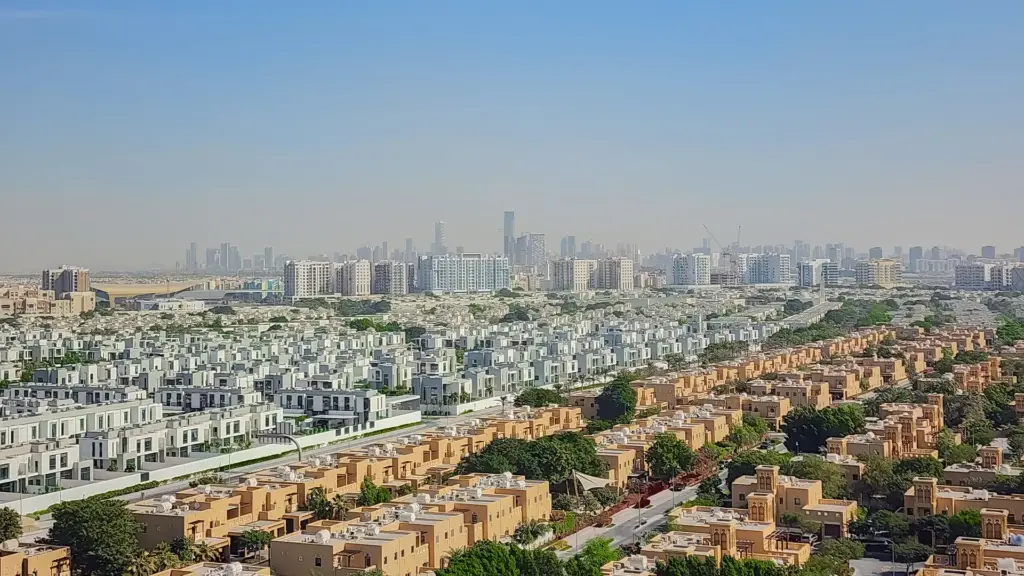
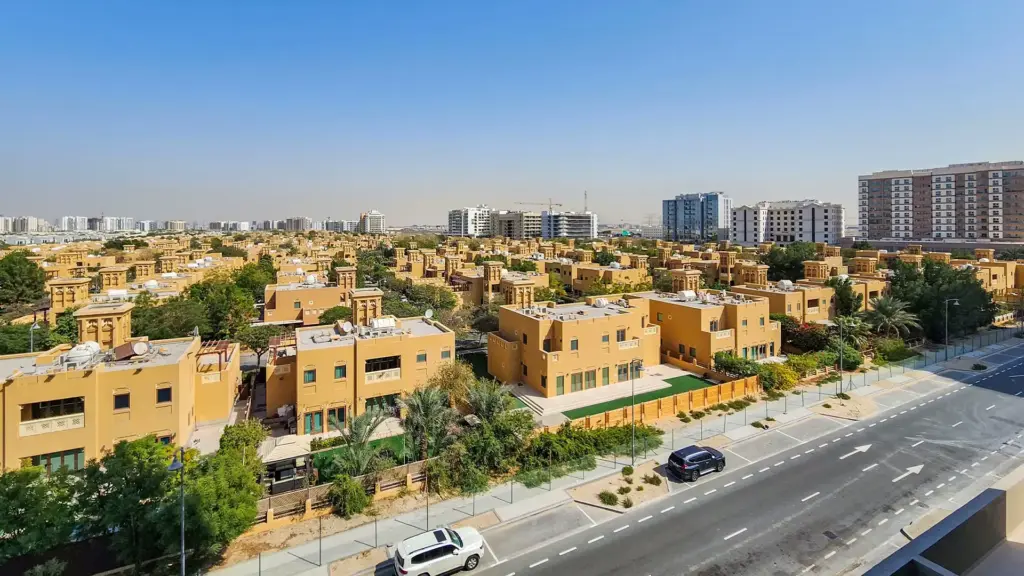
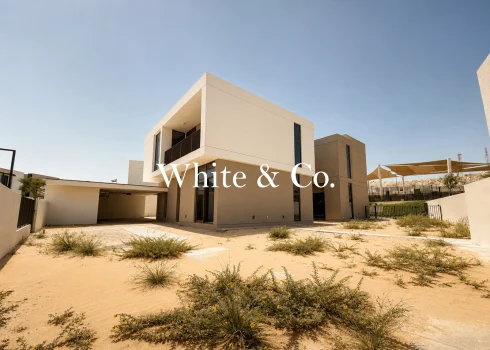
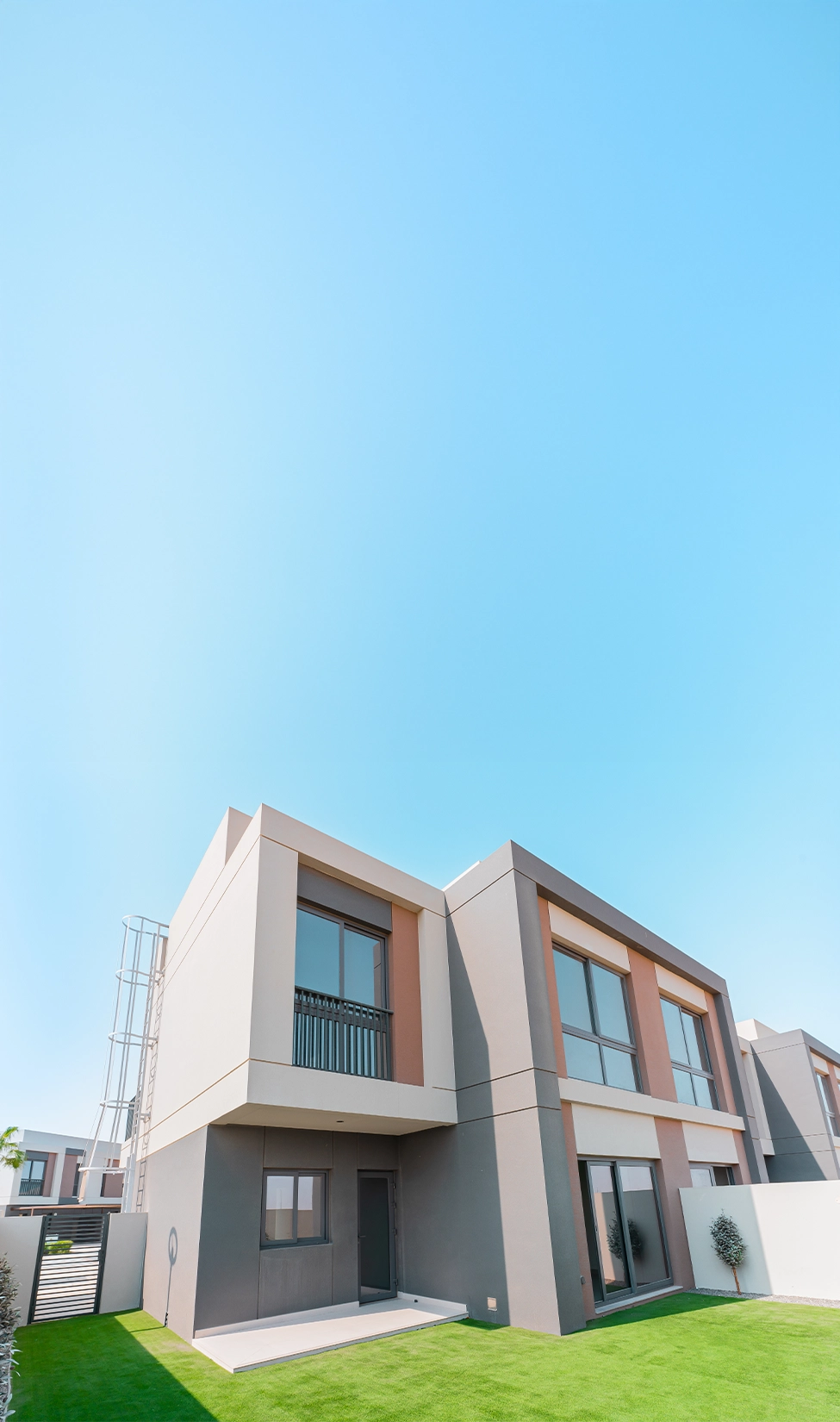
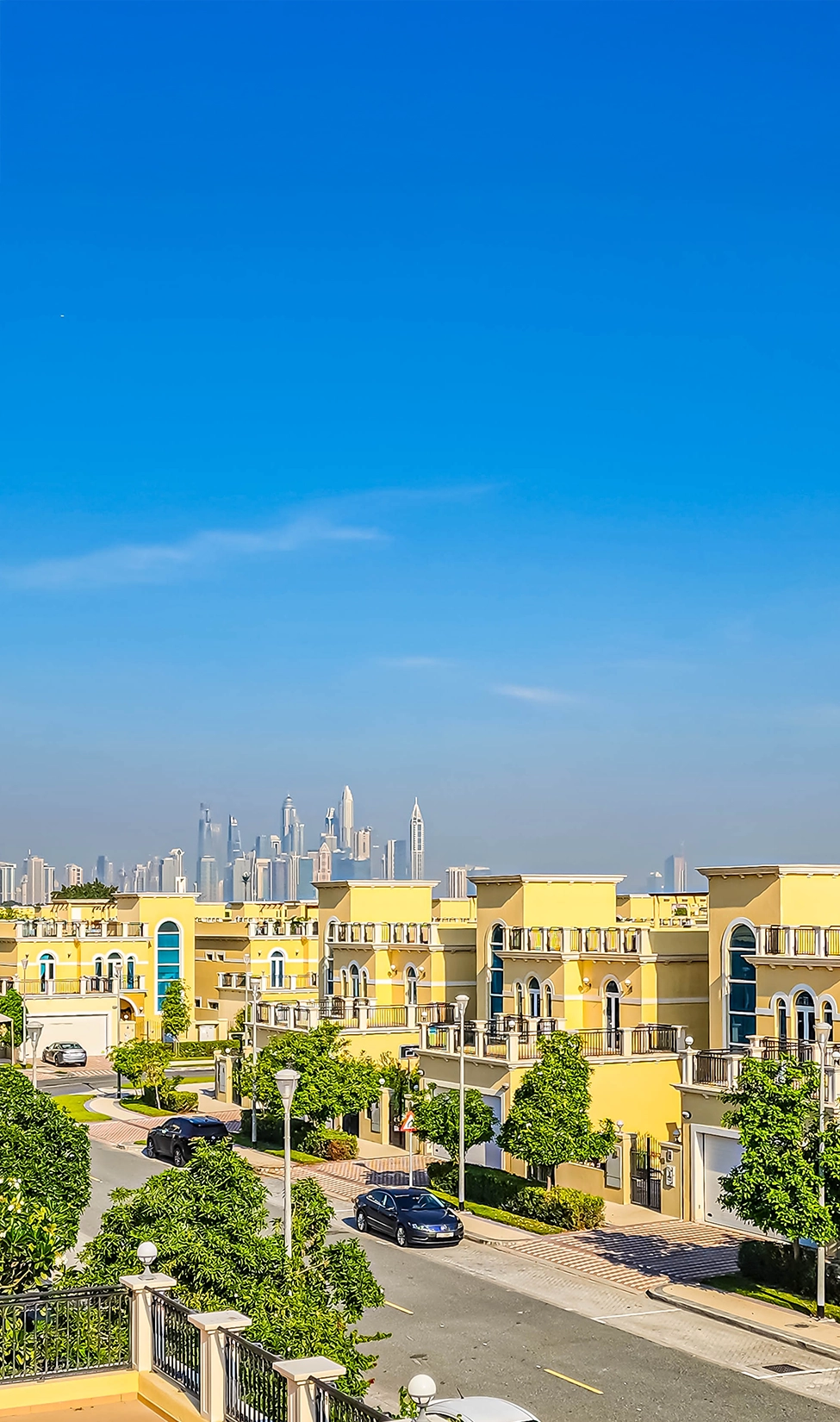
Al Furjan’s residential range is broader than most communities at its price point. The mix of contemporary and traditional villa architecture, Quortaj and Dubai Style villas from Nakheel sitting alongside newer private developer products, means buyers with different aesthetic preferences can find a home without compromise.
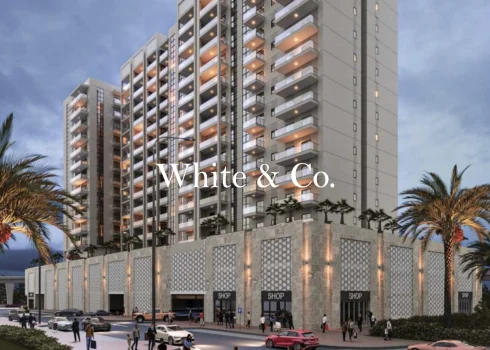
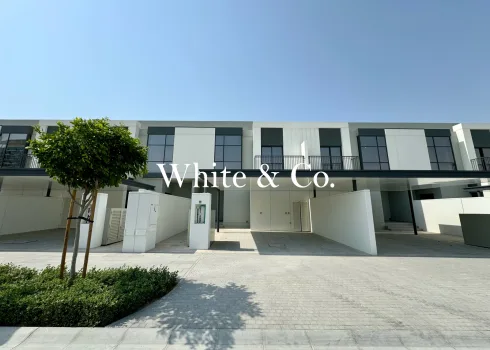
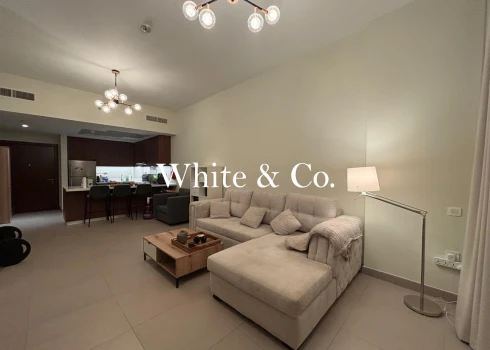
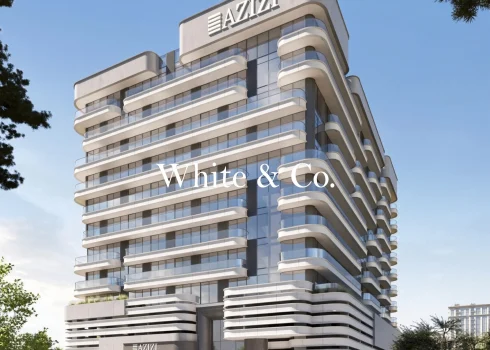
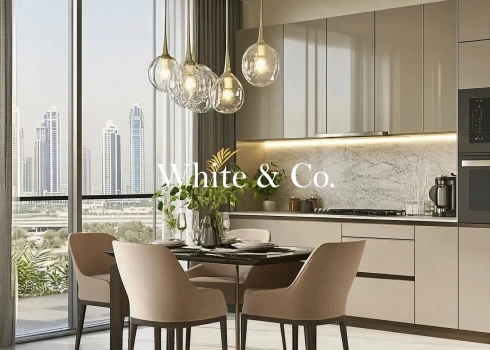
Three to five-bedroom villas offer private gardens, maid’s rooms and dedicated parking across both contemporary and traditional styles. Three and four-bedroom townhouses from Nakheel and NED Al Ghurair provide open-plan living with private outdoor spaces and access to shared community amenities. One to three-bedroom apartments in low to mid-rise buildings from developers including Azizi carry strong rental demand and investor appeal. And land plots remain available for custom residential development, a rare opportunity within an established, fully functioning neighbourhood.
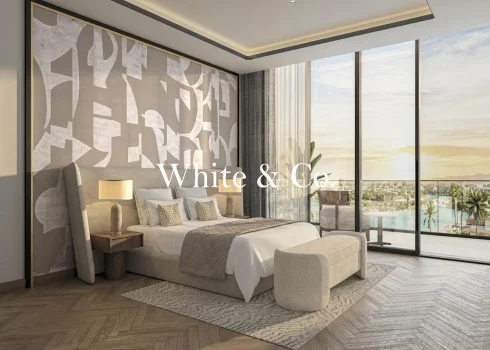
The upcoming development pipeline adds further options for buyers and investors. Tilal Al Furjan with four and five-bedroom villas, Azizi Central, SPARKLZ by Danube, ZaZEN Ivy and PG Maison all reflect continued developer confidence in the community. For investors this pipeline represents additional rental stock and community amenity investment. For existing owners, ongoing development by Nakheel and private developers underpins the capital appreciation trajectory.
Al Furjan ranks among the top communities in Dubai for mid-tier villa rental and sales activity. Service charges across the community are low relative to Emirates Living and comparable Nakheel communities, a meaningful operational advantage for both owner-occupiers and buy-to-let investors managing ongoing costs.
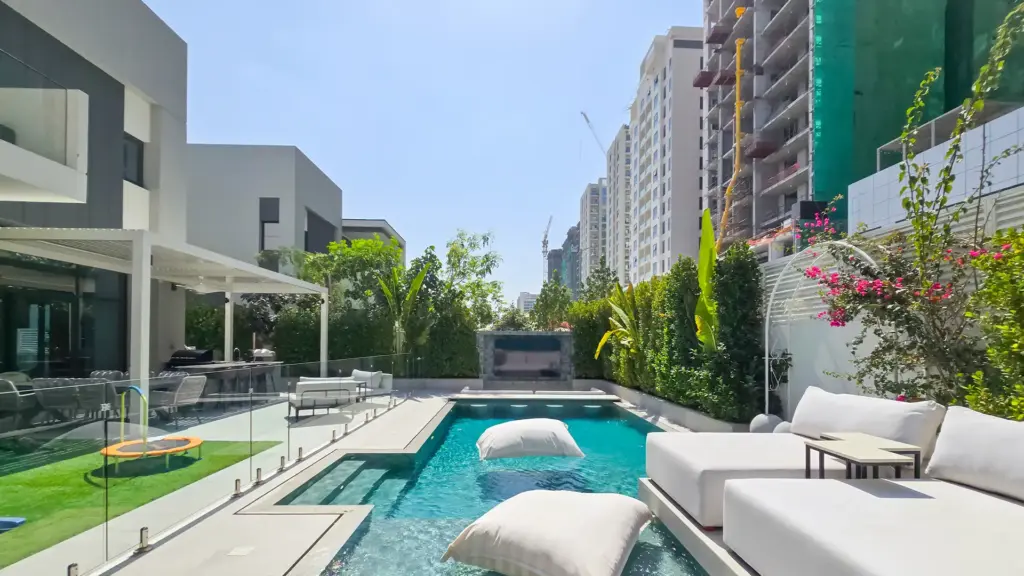
Al Furjan Dubai suits families who want space, strong in-community schools and genuine quiet at a price point that delivers more than central Dubai alternatives. It suits Abu Dhabi commuters for whom the location removes meaningful time from a journey made multiple times a week. It suits investors attracted by low service charges, metro access, the Al Maktoum Airport growth story and a rental demand base driven by long-term family tenants rather than transient populations. And it suits buyers who want a plot to build on within a community that is already fully functioning rather than waiting for a greenfield development to form around them.
It does not suit buyers whose daily working lives require Downtown or DIFC proximity and who find a 30-minute commute genuinely burdensome. It does not suit those looking for beach proximity or the energy of a mixed-use urban address. And buyers who need a wide selection of ready properties to consider should be aware that well-priced stock here moves without extended deliberation: the community’s stability and owner-occupier base keep supply constrained.
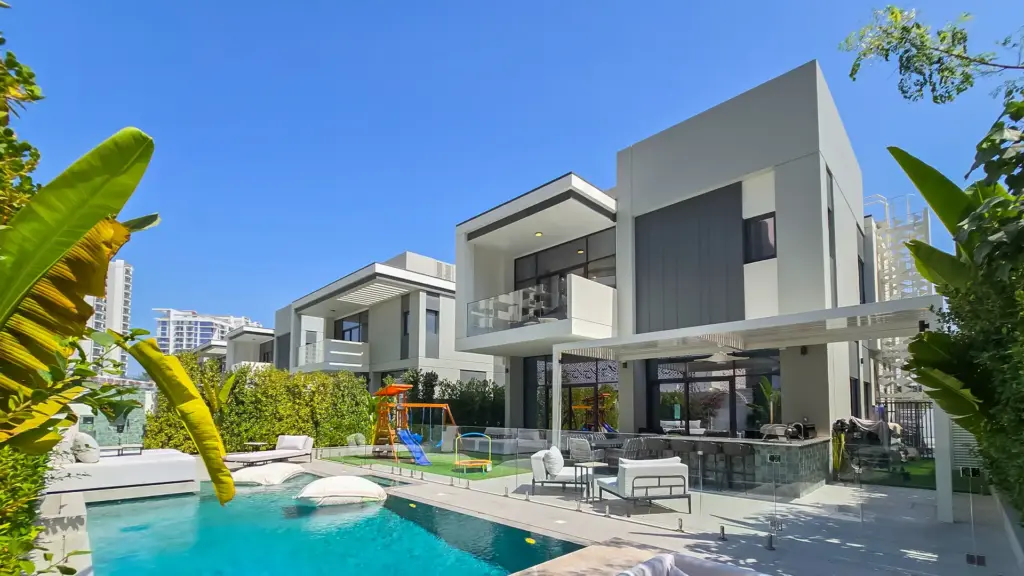
The most persistent misconception about Al Furjan is that it is too far from the rest of Dubai to be practical. Dubai Marina is approximately 15 minutes away, Downtown around 30 minutes and the broader New Dubai corridor including JLT, Media City and Internet City is within easy reach. The community’s position between two major highways means access in multiple directions is straightforward, and peak-hour congestion while present is less severe than in communities positioned in single-exit configurations.
Active construction continues in some areas of the community. Buyers should assess the specific cluster and proximity to current development activity before committing. The overall trajectory, Nakheel’s continuing investment in parks, pools and community infrastructure, is positive, but the transition period brings the disruption that accompanies any live development.
Service charges are a genuine structural advantage relative to comparable communities. Buyers should still request RERA-registered service charge statements for specific buildings and plots, but the community’s overall charge structure compares favourably to its peer group in a way that compounds over years of ownership.
For off-plan buyers, the pipeline from multiple developers reflects confidence in the community’s rental and sales demand. Factor handover timelines honestly against your own plans and rental income projections.
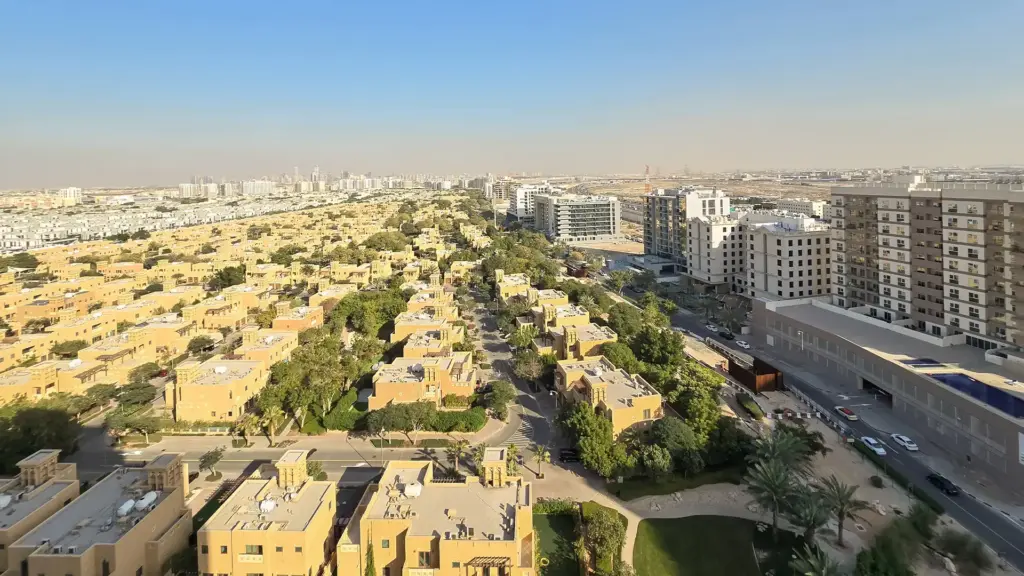
The greenery is the biggest gap between listings and lived experience. Al Furjan’s landscaping, the parks woven between residential clusters, the tree-lined streets and the maintained garden corridors, creates a visual and sensory environment that photographs compress into something that looks ordinary. Walking through it is a different experience. The community is noticeably greener than its price point and location would lead buyers to expect, and that quality is invisible in any listing.
The community feel is similarly absent from photography. McCafferty’s on a Thursday evening, the school gates on a weekday morning, the padel courts on a weekend afternoon, the pavilion on a Friday with families running errands: these are the textures of an established neighbourhood. They exist in Al Furjan in a way that the community’s relatively modest media profile does not reflect. Buyers who arrive expecting a dormitory suburb and find a functioning village are a consistent pattern in the experience of brokers working the area.
The demographic mix is also difficult to resolve without visiting. The impression from a distance, that Al Furjan is either entirely tenanted or lacks a diverse resident base, does not match the reality of a community with a meaningful owner-occupier base, a stable long-term rental population and a demographic range running from young professionals in apartments to established families in five-bedroom villas. The community’s cohesion comes precisely from that mix and it is not something a floor plan or an exterior photograph can communicate.
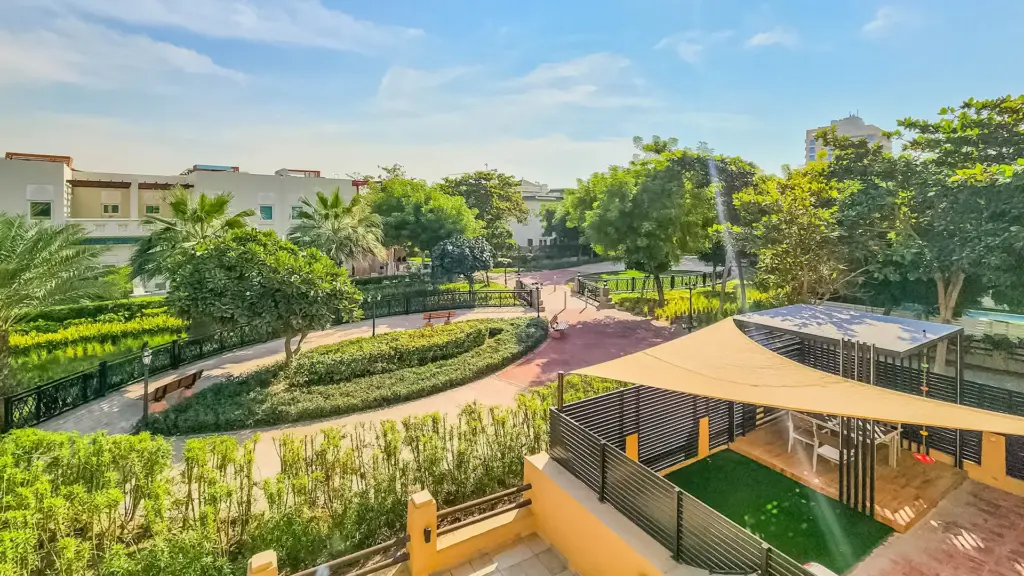
Al Furjan’s medium-term outlook is shaped by two converging forces: Nakheel’s continued investment within the community and the structural growth of Dubai’s south-western corridor driven by the expansion of Al Maktoum International Airport.
The airport story is the larger of the two. Al Maktoum International Airport is one of the most significant infrastructure projects in the region’s recent history, and as it moves through successive development phases it will generate residential, commercial and professional demand across a corridor in which Al Furjan Dubai is among the best-positioned established communities. The 20-minute drive time from Al Furjan to DWC is not just a convenience figure: it is a strategic positioning advantage that will become more valuable as the airport grows in operational scale and employment base. Communities in this corridor with functioning schools, established retail and metro access are a finite asset. Al Furjan Dubai has all three.
Within the community, Nakheel’s rolling investment programme demonstrates continued developer engagement with Al Furjan as a live community rather than a completed and divested project. The upcoming pipeline adds both new stock and new amenity investment and reflects developer confidence in sustained rental and sales demand.
Current pricing relative to Al Furjan’s location, infrastructure, school provision, metro access and size of home reflects a market that has not yet fully priced in the airport story or the ongoing community investment. For buyers with a three to five-year horizon, that gap between current pricing and the structural value of what Al Furjan Dubai offers represents one of the more compelling cases in Dubai’s mid-market family segment. Rental demand is strong and expected to remain so, driven by the family tenant base, the Abu Dhabi commuter segment and the growing population of the south-western corridor. The combination of low service charges, metro access, quality in-community schools and that structural demand profile produces a defensible yield case with a clear capital appreciation argument running alongside it.

| Areas | Avg rental/ Square Foot | Avg sale/ Per sq Foot | Avg Sq Footage |
| Al Furjan | AED 88 | AED 1,695 | 3,324 Sq ft |
| Dubai South | AED 62 | AED 1,198 | 3,271 Sq ft |
| Jumeirah Park | AED 88 | AED 2,051 | 4,430 Sq ft |
| Emirates Living | AED 108 | AED 2,341 | 3,002 Sq ft |
| Areas | Avg rental/ Square Foot | Avg sale/ Per sq Foot | Avg Sq Footage |
| Al Furjan | AED 103 | AED 1,269 | 975 Sq ft |
| Dubai South | AED 85 | AED 1,021 | 734 Sq ft |
| Jumeirah Park | AED 88 | AED 2,051 | 4,430 Sq ft |
| Emirates Living | AED 117 | AED 1,805 | 1,110 Sq ft |






Your details have been passed to Finsbury Wealth. One of their advisers will be in touch within two working days to arrange a convenient time to talk.
If you’d prefer to reach out directly in the meantime, their contact details are below.